
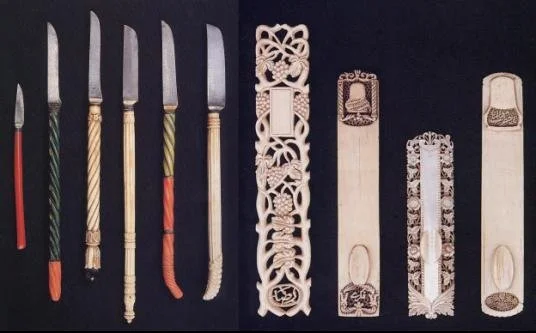
Calligraphy is the most recognizable of Islamic arts, and it is often seen in its finished form—an inscription written on paper; carved in stone, wood, or ivory; cast in metal; or woven into fabric. Yet calligraphy always begins as a trace left by a pen, a practice sustained by a rich material culture. Cultural historian İrvin Cemil Schick looks at the wide array of tools used in the artistic practice of Islamic calligraphy, such as reed pens, penknives, cutting boards, inks, inkwells, papers, and scissors.
Speaker:
İrvin Cemil Schick, Cultural historian
İrvin Cemil Schick is a cultural and intellectual historian specializing in the Ottoman Empire. He holds Ph.D.s from MIT and the École des Hautes Études en Sciences Sociales, in Paris, and has taught at Harvard University, MIT, and Istanbul Şehir University. He has also held guest positions at Boston University, Sabancı University, Boğaziçi University, and the University of Massachusetts, Amherst. His principal research interests include the Islamic arts of the book, particularly calligraphy, illumination, and marbling; gender, sexuality, spatiality, and the body in Islam; animals and the environment in Islam; and occult practices in Islam.
This event is part of In Conversation, a series of evening programs that feature local and international curators, artists, scholars, and more. Running from September through April, these events highlight our temporary exhibitions, permanent collections, and a range of creative voices.
Support for this lecture is provided by the Norma Jean Calderwood Lecture Fund. The Norma Jean Calderwood Lecture Fund honors a longtime friend of the Harvard Art Museums who pursued graduate study in Islamic art at Harvard and who for many years taught Islamic and Asian art at Boston College and at the Museum of Fine Arts, Boston.